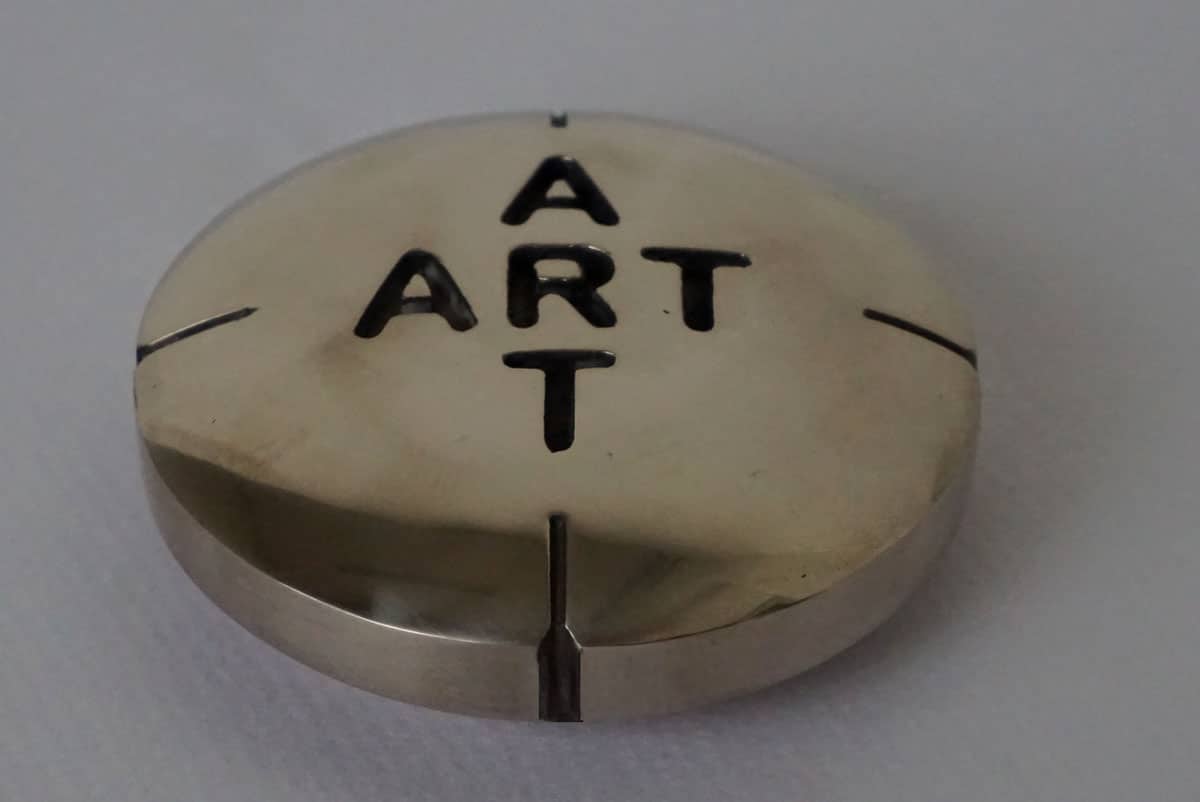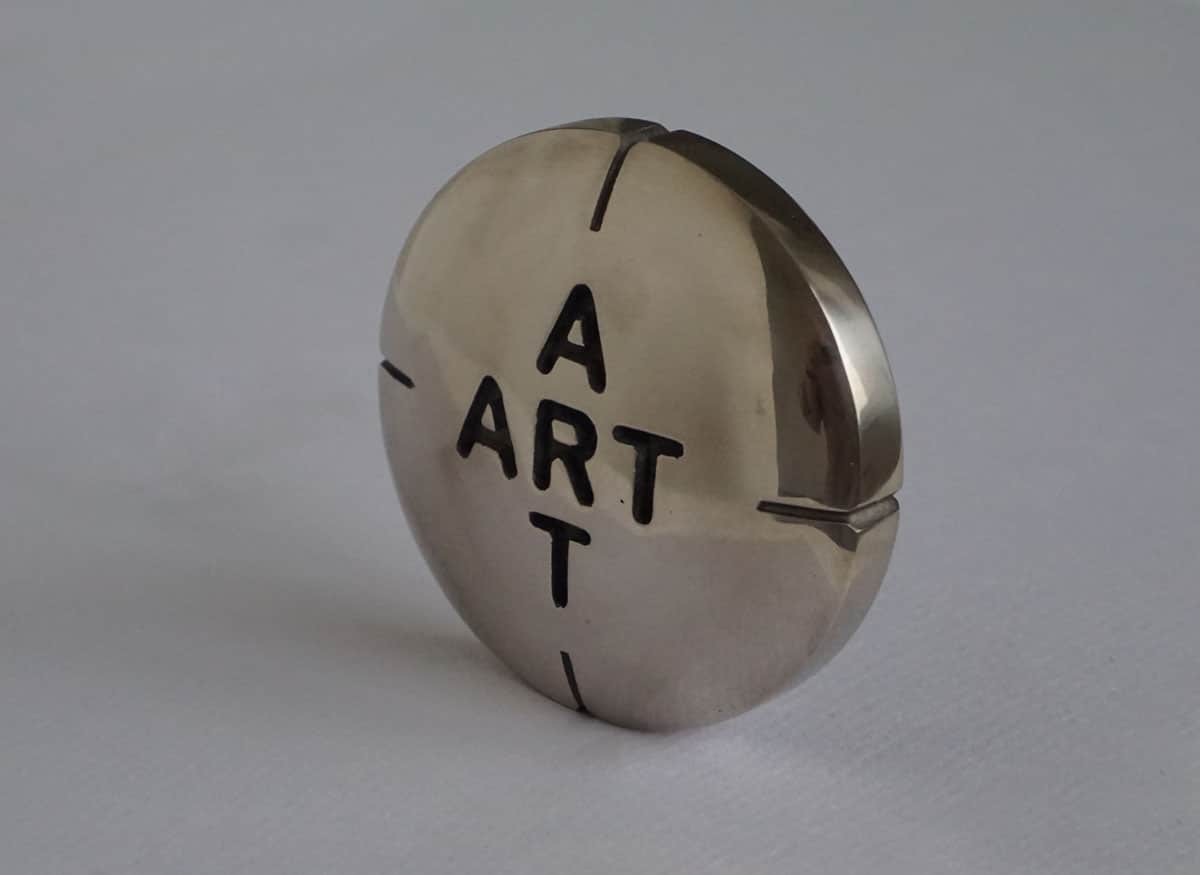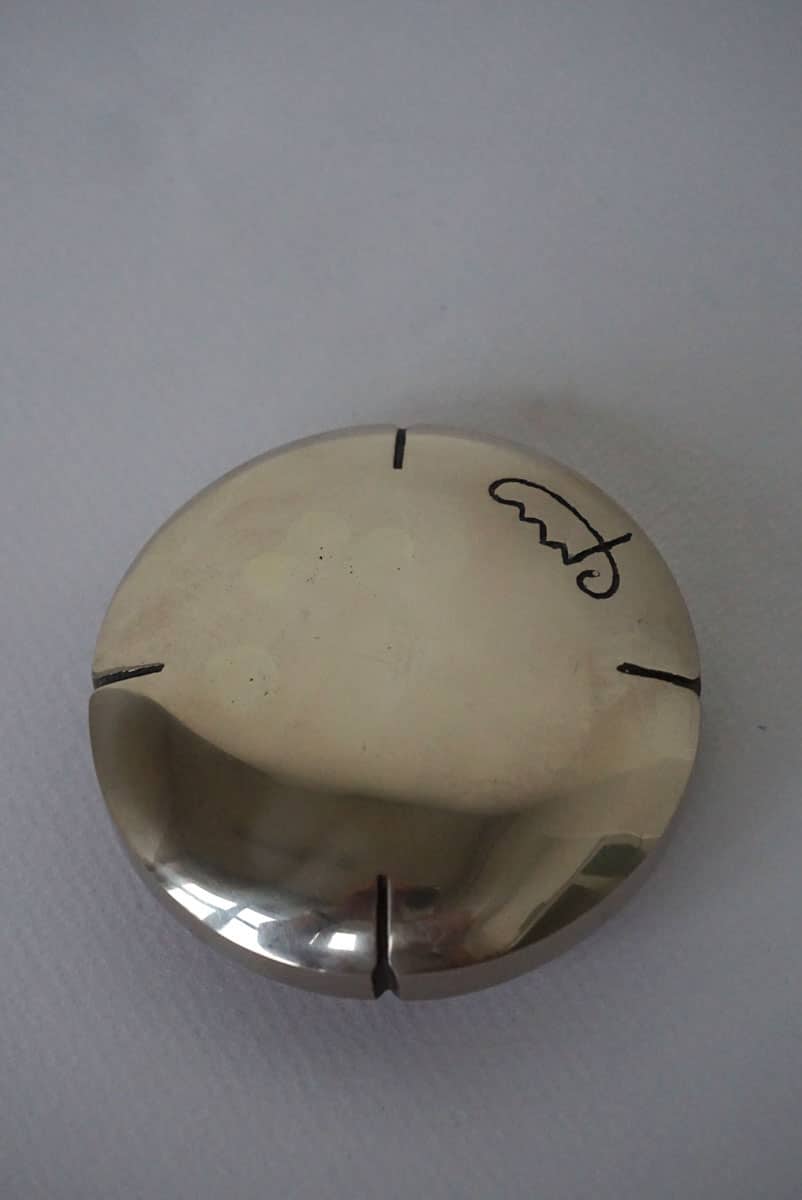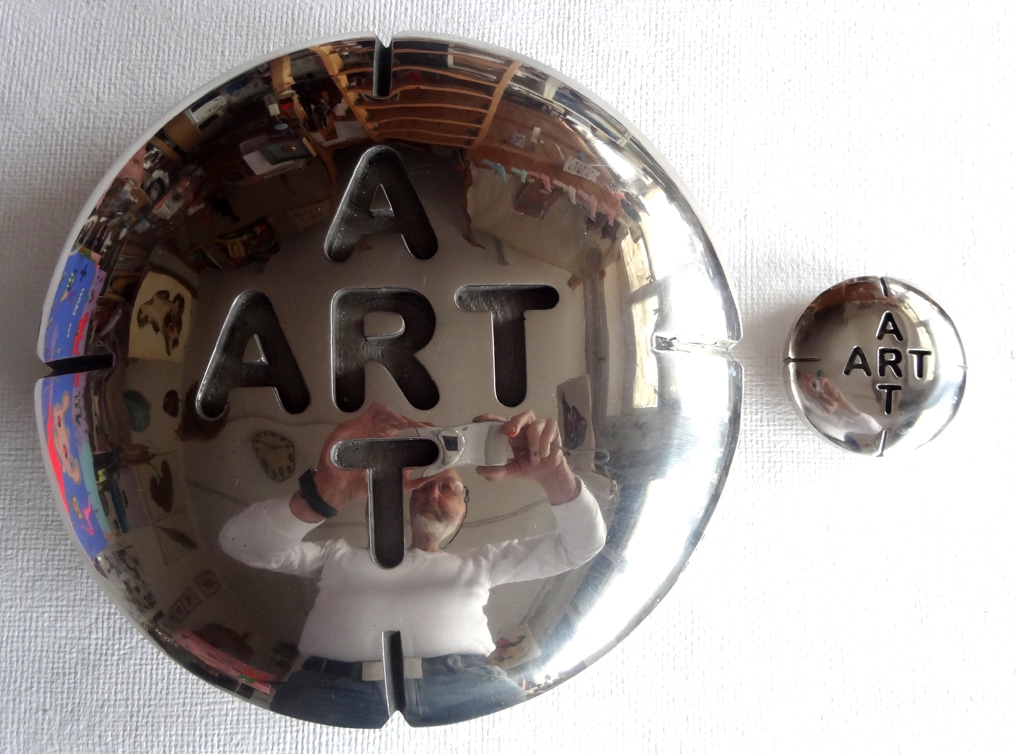
| Medium | alpaca plated solid bronze |
|---|---|
| Dimensions | ø 8,5 cm (3.3"), h 3 cm (1.2"), w 830 gr. |
| Year | 2014 |
| Edition | 48 |
| Details | comes in a nice box with certificate of authenticity |
Out of stock
Amos Plaut (1940) studied art, design and interior architecture at the Academy of fine arts Wiesbaden. From 1967 to 1984 he worked as an interior designer and designer in Israel. Then he emigrated to Germany and has been working as a freelance artist ever since.
This piece has been sold. Leave your email and we will keep you posted about similar and upcoming works.
every piece includes a Certificate of Authenticity (COA) and full provenance.
never rolled; always packed flat between protective board.
shipped fully insured via DHL Express or FedEx.
Edition numbers are assigned at the time of dispatch and may differ slightly from the number shown in product images.
Also available with the following finishes:
patina (bronze color), polished, and 24 karat gold plated
and in ø 30 cm (except 24 karat gold plated)
| Weight | 2 kg |
|---|
Amos Plaut (1940) studied art, design and interior architecture at the Academy of fine arts Wiesbaden.
From 1967 to 1984 he worked as an interior designer and designer in Israel. Then he emigrated to Germany and has been working as a freelance artist ever since.
Since 1987 the art works of Amos Plaut have been exhibited amongst others in Bremen, Duisburg, Düsseldorf, Frankfurt, Wiesbaden, Mainz, Mülheim and Dallas (Texas, u.s.a.).
In his artistic work he wants to commit to a material or technique. “I am in terms of the techniques used, a complete artist. I try every new event or any new state in my life to express a new technique. Allround art is an echo of my life all round life.”
Plaut’s work includes abstract and figurative works such as drawings, watercolors, oil paintings, terracotta, plaster and bronze sculptures, as well as works in wood and plastic, or a combination thereof. Clearly, however, is Plaut’s philosophy of life, he describes it with a text of Dante, La Divina Commedia, Inferno, XXXIV, 94, 133-139.
Subscribe to The Journal for periodic art notes and new arrival alerts,